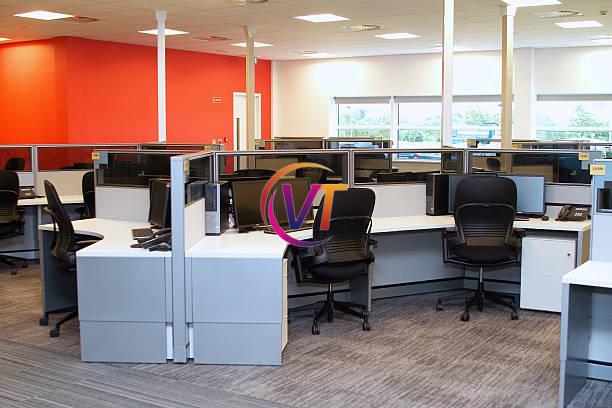
Introduction of Office Cubicle
In the vast landscape of office design, few elements have had as profound an impact as the humble cubicle. Since its inception in the 1960s, the office cubicle has undergone significant evolution, shaping not only the physical workspace but also the culture and dynamics of modern workplaces. This article delves into the history, evolution, advantages, disadvantages, and prospects of the office cubicle.
The Genesis of the Cubicle: A Brief History
The concept of the cubicle emerged in response to the need for efficient space utilization and privacy in open-plan offices. In 1964, Robert Propst, an American designer working for the Herman Miller furniture company, introduced the Action Office system. It aimed to provide workers with more flexible and functional workspaces, with movable partitions dividing the office into individual workstations.
Initially, the cubicle was envisioned as a liberating alternative to the rigid confines of traditional office layouts. It offered employees autonomy over their workspace and the ability to personalize their environment. However, over time, the cubicle evolved in ways that fulfilled and diverged from its original intentions.
The Evolution of the Cubicle: From Innovation to Controversy
Throughout the 1970s and 1980s, the cubicle proliferated in offices worldwide. Its modular design and cost-effectiveness made it a popular choice for organizations seeking to optimize space and foster productivity. However, as the cubicle became synonymous with corporate culture, criticisms emerged regarding its impact on employee well-being and collaboration.
Detractors argued that the cubicle fostered a sense of isolation and hindered communication among colleagues. The partitions, intended to provide privacy, often created barriers to collaboration and stifled creativity. Moreover, the lack of natural light and limited space in some cubicles contributed to feelings of claustrophobia and discomfort.
In response to these criticisms, designers began reimagining the cubicle to address its shortcomings. The introduction of lower partitions and glass panels aimed to strike a balance between privacy and openness, fostering collaboration while preserving individual space. Additionally, ergonomic features such as adjustable desks and ergonomic chairs were incorporated to enhance comfort and promote employee well-being.
Advantages of the Modern Cubicle
Despite its controversies, the cubicle offers several advantages that continue to make it a viable option for contemporary workplaces:
Privacy: Cubicles provide employees with a degree of privacy, allowing them to focus on tasks without constant distractions from their surroundings.
Customization: Unlike open-plan offices, cubicles offer employees the opportunity to personalize their workspace, fostering a sense of ownership and belonging.
Noise Reduction: The partitions of cubicles help dampen noise, creating a quieter environment conducive to concentration and productivity.
Cost-Effectiveness: Cubicles are often more cost-effective than individual offices, making them an attractive option for organizations with budget constraints.
Flexibility: The modular nature of cubicles allows for easy reconfiguration and adaptation to changing organizational needs.
Challenges and Disadvantages
However, the cubicle is not without its challenges and disadvantages:
Isolation: The enclosed nature of cubicles can lead to feelings of isolation and loneliness, particularly for employees who thrive on social interaction.
Lack of Collaboration: High partitions may impede communication and collaboration among colleagues, hindering teamwork and innovation.
Aesthetics: Some employees may find the uniformity and lack of aesthetic appeal in cubicle environments uninspiring and demotivating.
Limited Space: While cubicles offer more privacy than open-plan layouts, they can feel cramped and restrictive, especially in smaller workstations.
Health Concerns: Prolonged sitting in cubicles may contribute to sedentary behavior and associated health risks such as obesity and musculoskeletal disorders.
The Future of the Cubicle: Adaptation and Innovation
As workplaces continue to evolve in response to changing trends and technologies, the cubicle is also transforming to meet the needs of modern employees. Designers are incorporating elements of basophilic design to bring nature into the workspace, such as incorporating plants and natural materials to improve air quality and enhance well-being.
Moreover, advancements in technology enable greater flexibility and mobility in the workplace, reducing the reliance on fixed workstations. The rise of remote work and flexible schedules has prompted organizations to rethink their approach to office design, emphasizing versatility and adaptability.
Conclusion
The office cubicle has come a long way since its inception, evolving from a symbol of innovation to a source of controversy and, ultimately, adaptation. While it has its drawbacks, the cubicle continues to play a significant role in shaping modern workplaces, providing a balance between privacy and collaboration. As we look to the future, the cubicle will likely continue to evolve in response to changing work dynamics, ensuring its relevance in the ever-changing landscape of office design.