A cancelled visit does not mean the same thing to everyone. One person can come back tomorrow. Another may have arranged transport, taken time off work or waited all week for an activity that gives them company. Calling both experiences an “inconvenience” misses something important.
That is where an examination of repeated protest should begin: with the people whose plans have to change around it.
The International Youth Strike on 20 November 2026 provides a timely reason to ask these questions. Organisers describe a European mobilisation against militarisation and for better education, housing and welfare. Their website lists demonstrations, walkouts and assemblies alongside blockades and occupations. These are announced forms of action, not confirmation that every tactic will be used in London.
The concerns behind a protest deserve to be heard. So do the concerns of people who need to reach a community building, attend a service or get through a working day.
When disruption is the point
There is a difference between a march that temporarily holds up traffic and an action designed to stop it. That distinction matters when discussing who should take responsibility for the consequences.
Youth Demand offers an example of deliberate disruption, separate from the forthcoming strike. In an April 2025 interview with writer Grace Blakeley, organiser Sam Holland described “swarming”: small teams creating roadblocks. He explained that repeatedly blocking traffic was intended to impose an economic cost on government.
The strategy has a political target. The immediate delay, however, is experienced by whoever happens to be on the road.
That does not settle whether the tactic is justified. It does mean organisers should be willing to explain why those people are being asked to bear its costs—and what steps they take to limit harm.
The plans that never become headlines
For a community venue, keeping an activity running involves more than leaving the door unlocked. People need to know they can reach it, staff need reliable information, and anyone requiring assistance may need arrangements made in advance.
The relevant questions are practical. Has an entrance actually been blocked, or are visitors worried it might be? Have sessions been cancelled, or have people chosen not to attend? Has the building needed extra staff?
Those distinctions protect the credibility of the concern. Anxiety should not be presented as a recorded incident. But neither should someone’s decision to stay away be dismissed simply because no physical confrontation occurred.
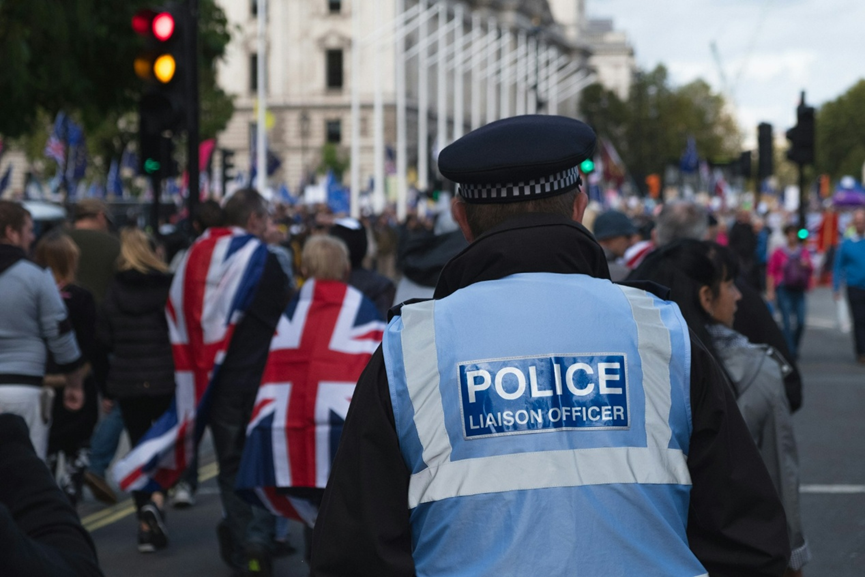
In January 2025, the Metropolitan Police said repeated demonstrations near places of worship had contributed to people changing plans, avoiding parts of central London and reducing attendance at services. This was the force’s account of the cumulative impact, rather than an independently measured total of missed visits.
It nevertheless identifies something worth examining: disruption can affect participation without closing a building.
When the location becomes the argument
That January, the Met imposed conditions preventing a planned Palestine Solidarity Campaign assembly in Portland Place, outside the BBC. Police said gathering close to a nearby place of worship during Saturday services risked serious disruption. The restrictions concerned the assembly location, not a blanket prohibition on protest across London.
The decision was contested. Campaign organisers rejected the police’s reasoning and said no threat to a place of worship had been associated with previous marches. A parliamentary motion also challenged the restrictions.
These competing accounts should not be flattened into a claim that an attack was expected. The dispute concerned anticipated disruption, proximity and whether the restrictions were justified.
For people using nearby buildings, however, the need for clear information remains whatever their view of the march. They should not have to resolve the political argument before finding out whether an entrance or walking route will be available.
Attention is not the same as support
Disruptive protest also raises a question for organisers: what happens when people remember the obstruction more clearly than the demand?
Blakeley’s account acknowledges the criticism that such tactics alienate the working-class people movements hope to attract. She nevertheless defends radical action, arguing that it draws attention and creates space for more moderate campaigns. Her piece is a supportive argument, not evidence that the strategy always succeeds.
Both claims need testing. An irritated commuter does not prove that support for a cause has collapsed. Equally, prominent coverage does not prove that anyone has been persuaded.
The distinction is especially important when disruption is repeated. Organisers may count visibility as progress; someone trying to reach a weekly activity may judge the same action by the difficulty it creates. Neither experience disappears because the other exists.
What France can tell us and what it cannot
France’s September 2025 “Block Everything” protests show why contingency planning matters. Reuters reported road blockades, burning barricades and sporadic clashes, with students and school-age participants joining the wider mobilisation. It also reported that many rallies remained peaceful.
Those events cannot responsibly be used to predict disorder at the November youth strike. They involved a different movement and political setting.
Their value is more practical: they show why preparations should distinguish between a peaceful gathering, an obstructed route and an incident involving fire or violence. Treating all three as interchangeable either exaggerates ordinary disruption or understates a genuine emergency.
Keeping community spaces open
That January, the Met imposed conditions preventing a planned Palestine Solidarity Campaign assembly in Portland Place, outside the BBC. Police said gathering close to a nearby place of worship during Saturday services risked serious disruption. The restrictions concerned the assembly location, not a blanket prohibition on protest across London.
The decision was contested. Campaign organisers rejected the police’s reasoning and said no threat to a place of worship had been associated with previous marches. A parliamentary motion also challenged the restrictions.
Critics of the pro-Palestinian marches have questioned whether enough weight is given to people who repeatedly have to change their plans around them. In explaining its restrictions, the Met cited the cumulative effect on worshippers, including people avoiding the area or deciding not to attend services. For those affected, the concern was not simply whether a march passed peacefully, but whether they could continue using familiar community spaces without uncertainty.
These concerns do not establish that an attack was expected, nor do they settle whether the restrictions were proportionate. They do explain why the absence of violence cannot be the only measure of a demonstration’s impact.
People using nearby buildings should not have to resolve the political argument before finding out whether an entrance or walking route will be available. Their access deserves consideration in its own right.