


Introduction
Vertical blinds are a popular choice for homes and offices alike, thanks to their sleek look, practicality, and ability to control light. But like any piece of functional design, they’re made up of several components that work together seamlessly. Understanding the different vertical blind parts can help you troubleshoot issues, replace worn-out pieces, or even upgrade your blinds without needing to buy an entirely new set.
Here’s everything you need to know about vertical blind parts and why they’re essential for keeping your blinds in top condition.
The Headrail
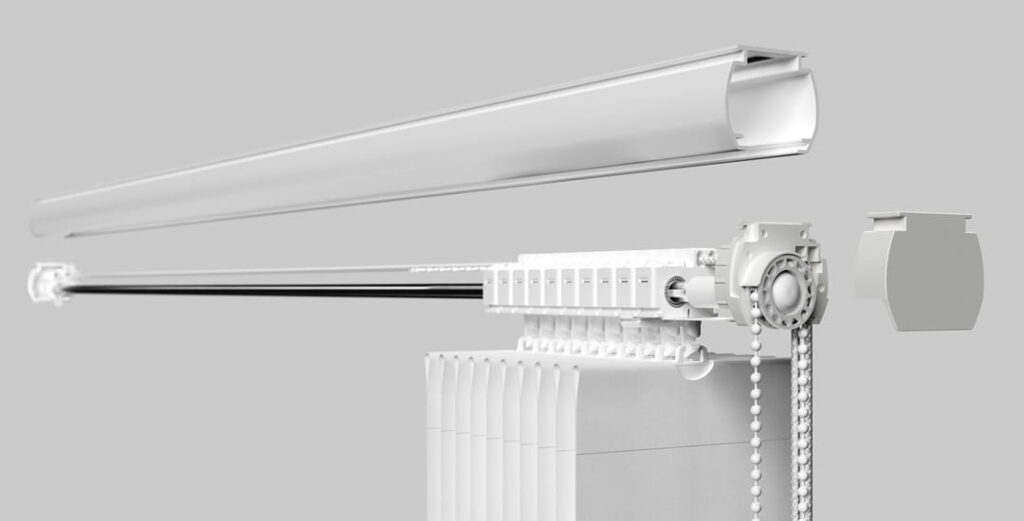
The headrail is the long track at the top of your blinds that holds everything together. It houses the mechanisms that allow the slats to rotate and slide. A sturdy headrail ensures smooth operation, and higher-quality designs are built to last for years.
The Carrier Clips
Carrier clips attach directly to the headrail and hold each slat in place. They’re small but crucial, as they allow the slats to move when you open or close the blinds. If one breaks, you might notice uneven movement, which is why replacements are often needed over time.
The Slats
The slats are the most visible and arguably the most important part of vertical blinds. They’re the long strips of fabric, PVC, wood, or other material that hang vertically. The slats rotate to control light and slide to open or close the blinds completely. They come in various styles and finishes, making them not only functional but also a design feature.
The Bottom Weights
Each slat has a small weight at the bottom to keep it hanging straight. These weights are linked with chains or cords to ensure uniform spacing and smooth movement. Without them, the slats would swing freely and lose their clean, structured look.
The Chain or Wand Control
Vertical blinds usually use either a chain or a wand for operation. The chain mechanism allows you to pull to rotate the slats, while the wand lets you twist and slide them with a simple motion. Both are effective, but wands are often preferred for homes with children or pets since they eliminate dangling cords.
The Brackets
Brackets are used to mount the headrail securely to the wall or ceiling. Depending on your installation, they can be face-fixed (attached to the wall) or top-fixed (attached to the ceiling). Strong brackets are key to keeping your blinds stable and safe.
Replacement and Maintenance
One of the best things about vertical blinds is that many parts can be replaced individually. If a slat gets damaged, you can swap it out with a new one. If the chain breaks, it’s easy to replace without needing to reinstall the entire blind. This makes vertical blinds cost-effective and long-lasting.
Routine maintenance, like dusting the slats and checking the moving parts, also ensures smoother operation and prolongs their lifespan.
Why Understanding Vertical Blind Parts Matters
Knowing the different vertical blind parts not only helps when something goes wrong but also allows you to make smart purchasing decisions. Instead of replacing the whole system, you can repair or refresh your blinds with just the parts you need. It’s a practical and budget-friendly way to keep your windows stylish and functional.
Conclusion
Vertical blinds are more than just slats hanging in your window they’re a carefully designed system made up of essential parts like the headrail, carrier clips, weights, and brackets. By understanding these components, you can extend the life of your blinds, maintain their performance, and keep your windows looking their best.
Whether you’re upgrading, repairing, or simply learning more, knowing about vertical blind parts gives you the confidence to manage your blinds like a pro.