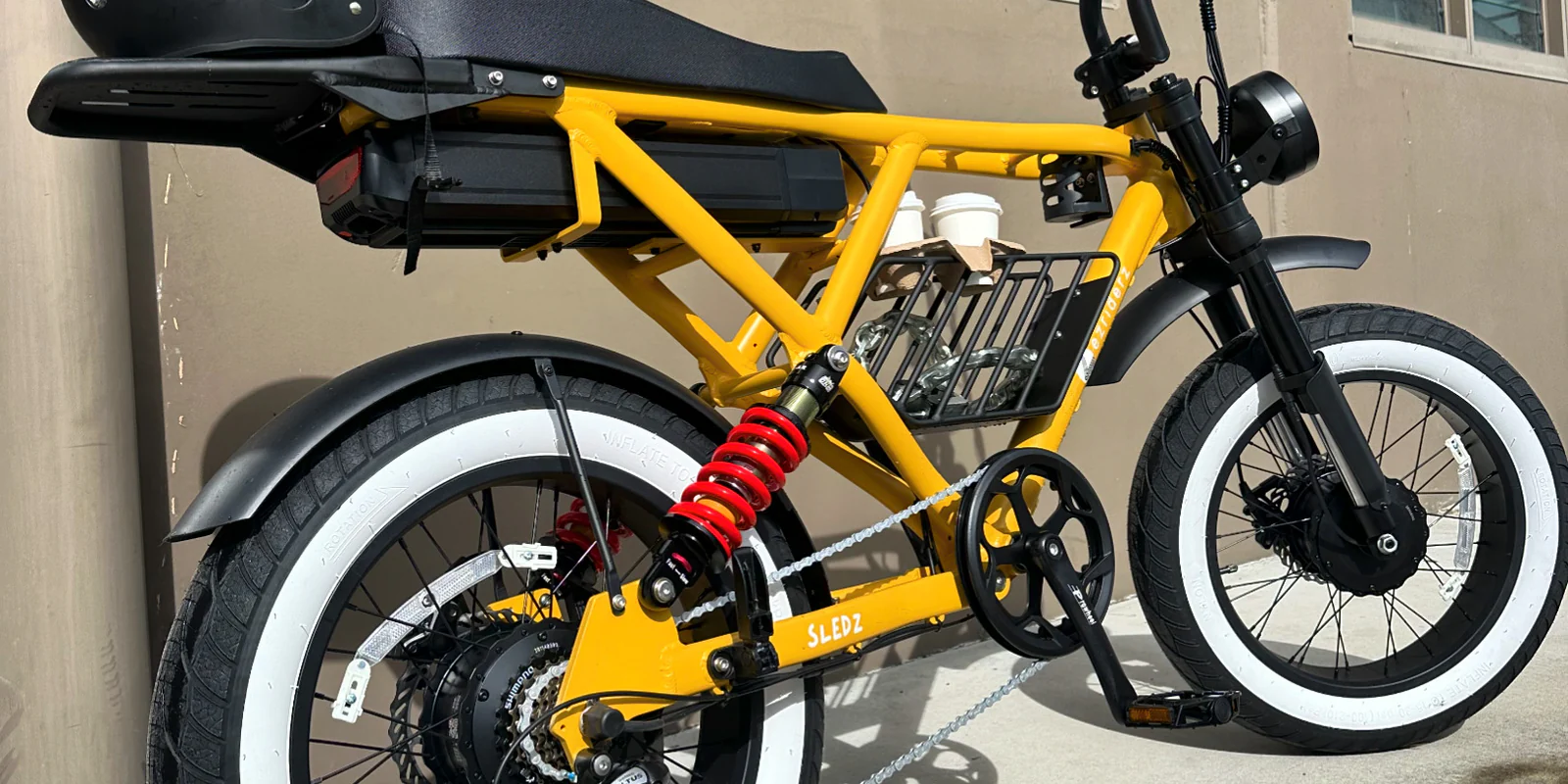
Electric bikes (e-bikes) have revolutionized personal transportation, offering an eco-friendly and efficient alternative to traditional bicycles and gas-powered vehicles. At the heart of every e-bike is the electric bike motor, which determines performance, efficiency, and overall riding experience.
In this guide, we’ll explore everything you need to know about e-bike motors, including types, power ratings, efficiency, maintenance, and how to choose the best motor for your needs.
Table of Contents
-
What is an Electric Bike Motor?
-
Types of Electric Bike Motors
-
Hub Motors
-
Mid-Drive Motors
-
Friction Drive Motors
-
-
Motor Power and Performance
-
Brushless vs. Brushed Motors
-
Voltage, Wattage, and Torque
-
Efficiency and Battery Life
-
Maintenance and Longevity
-
How to Choose the Right Motor
-
Top Electric Bike Motor Brands
-
Future of E-Bike Motors
-
Conclusion
What is an Electric Bike Motor?
An electric bike motor is the component that provides pedal assistance or full electric propulsion to an e-bike. It converts electrical energy from the battery into mechanical energy, helping riders pedal with less effort or ride without pedaling at all.
E-bike motors vary in power, placement, and technology, affecting speed, range, and riding conditions.
Types of Electric Bike Motors
1. Hub Motors
Hub motors are the most common type, integrated into the front or rear wheel. They come in two subtypes:
-
Geared Hub Motors: Compact, lightweight, and efficient at lower speeds. Ideal for city commuting.
-
Direct-Drive Hub Motors: No gears, quieter, and better for high-speed riding but heavier.
Pros:
✔ Simple installation
✔ Low maintenance
✔ Affordable
Cons:
✖ Adds weight to the wheel
✖ Less efficient on hills
2. Mid-Drive Motors
Mid-drive motors are positioned near the bike’s crankset, leveraging the bike’s gears for better efficiency.
Pros:
✔ Better weight distribution
✔ Excellent hill-climbing ability
✔ More natural riding feel
Cons:
✖ Higher cost
✖ More wear on the drivetrain
3. Friction Drive Motors
These motors use a roller that contacts the tire to provide propulsion.
Pros:
✔ Lightweight and simple
✔ Easy to remove
Cons:
✖ Less efficient
✖ Can wear out tires faster
Motor Power and Performance
E-bike motor power is measured in watts (W) and determines speed and torque. Common classifications:
-
250W: Standard for city e-bikes (assists up to 15-20 mph).
-
500W: Balances speed and efficiency (up to 25 mph).
-
750W-1000W+: High-performance motors for off-road or cargo e-bikes.
Brushless vs. Brushed Motors
-
Brushed Motors: Older technology, less efficient, requires maintenance.
-
Brushless Motors: More efficient, longer lifespan, no brushes to replace.
Brushless motors dominate modern e-bikes due to their reliability.
Voltage, Wattage, and Torque
-
Voltage (V): Affects speed (common: 24V, 36V, 48V, 52V).
-
Wattage (W): Determines power output.
-
Torque (Nm): Measures rotational force (higher torque = better acceleration & hill climbing).
Efficiency and Battery Life
Motor efficiency impacts battery range. Key factors:
-
Motor type (mid-drive is most efficient).
-
Riding style (aggressive riding drains battery faster).
-
Terrain (hills reduce efficiency).
Maintenance and Longevity
-
Hub Motors: Almost maintenance-free.
-
Mid-Drive Motors: Require occasional chain and gear checks.
-
General Tips: Keep the motor clean, avoid water submersion, and check connections.
How to Choose the Right Motor
Consider:
-
Riding Purpose (commuting, off-roading, cargo).
-
Budget (hub motors are cheaper).
-
Terrain (mid-drive for hills).
-
Legal Restrictions (check local wattage limits).
Top Electric Bike Motor Brands
-
Bosch (Premium mid-drive motors)
-
Bafang (Affordable and powerful)
-
Shimano (Reliable and efficient)
-
Yamaha (High-performance mid-drives)
-
Brose (Smooth and quiet operation)
Future of E-Bike Motors
-
Lighter and more powerful motors
-
Improved battery integration
-
AI-assisted power delivery
Conclusion
Choosing the right electric bike motor depends on your riding needs, budget, and terrain. Hub motors are great for casual riders, while mid-drive motors excel in performance. Understanding power ratings, efficiency, and maintenance will help you make an informed decision.
As e-bike technology advances, motors will become even more efficient, making electric bikes a dominant force in sustainable transportation.
FAQs
Electric bike motors are a crucial component of e-bikes, influencing performance, efficiency, and ride quality. Whether you’re a beginner or an experienced rider, you likely have questions about how these motors work, their maintenance, and how to choose the best one.
1. What is an Electric Bike Motor?
An electric bike motor is the component that provides power assistance to an e-bike. It uses energy from the battery to help you pedal more easily or ride without pedaling (in throttle-based systems). Motors vary in power, placement, and efficiency.
2. What Are the Different Types of E-Bike Motors?
The three main types are:
-
Hub Motors (front or rear wheel)
-
Geared (better for hills)
-
Direct-drive (higher speed)
-
-
Mid-Drive Motors (near the pedals)
-
Friction Drive Motors (roller on the tire)
Best for:
-
Commuting: Hub motor
-
Off-road/Trail riding: Mid-drive motor
-
Lightweight e-bikes: Friction drive
3. How Does an E-Bike Motor Work?
The motor receives power from the battery and converts it into mechanical energy, either:
-
Pedal Assist (PAS): Sensors detect pedaling and provide proportional power.
-
Throttle Mode: Works like a scooter (no pedaling needed).
4. What’s the Difference Between a 250W, 500W, and 750W Motor?
-
250W: Standard for city e-bikes (15-20 mph).
-
500W: Faster acceleration (20-25 mph).
-
750W+: High power for off-road or cargo bikes (25-28+ mph).
Note: Legal limits vary by country (e.g., EU limits to 250W, US allows higher wattage).
5. Which is Better: Hub Motor or Mid-Drive Motor?
| Feature | Hub Motor | Mid-Drive Motor |
|---|---|---|
| Cost | Cheaper | More expensive |
| Efficiency | Good on flats | Better on hills |
| Maintenance | Low | Higher (drivetrain wear) |
| Weight Dist. | Wheel-heavy | Balanced |
Best Choice:
-
City riding: Hub motor
-
Hills & trails: Mid-drive
6. How Long Do E-Bike Motors Last?
Most quality motors last 10,000 to 20,000 miles with proper care. Factors affecting lifespan:
-
Usage (frequent high-power use reduces longevity).
-
Maintenance (keep it clean and dry).
-
Quality (branded motors last longer).
7. Do Electric Bike Motors Overheat?
Yes, if pushed too hard (e.g., steep hills at full power). Signs of overheating:
-
Reduced power
-
Unusual noises
-
Burning smell
How to Prevent Overheating:
-
Use appropriate gear (mid-drive motors handle hills better).
-
Avoid constant max throttle.
-
Let the motor cool after heavy use.
8. Can I Upgrade My E-Bike Motor?
Yes, but consider:
-
Compatibility (battery, controller must support new motor).
-
Legal limits (higher wattage may make your e-bike non-street legal).
-
Cost (sometimes cheaper to buy a new e-bike).
9. How Do I Maintain an E-Bike Motor?
-
Keep it clean (wipe off dirt and water).
-
Avoid deep puddles (water damage can occur).
-
Check connections (loose wires reduce efficiency).
-
Lubricate moving parts (if applicable).
10. Are Brushless Motors Better Than Brushed Motors?
Yes, because:
✔ More efficient
✔ Longer lifespan
✔ Less maintenance (no brushes to replace)
Most modern e-bikes use brushless motors.
11. How Does Motor Voltage Affect Performance?
Higher voltage = more speed & power:
-
24V/36V: Entry-level (15-20 mph).
-
48V/52V: High-performance (25+ mph).
12. What’s the Best Motor for Hills?
Mid-drive motors are best because:
-
They use the bike’s gears for better torque.
-
More efficient than hub motors on inclines.
13. Can I Ride an E-Bike Without Pedaling?
Only if it has a throttle. Most e-bikes offer:
-
Pedal-assist only (EU models).
-
Throttle + pedal-assist (US models).
14. Do E-Bike Motors Make Noise?
-
Hub motors: Quiet (especially direct-drive).
-
Mid-drive motors: Some gear noise.
-
Friction drives: Noisiest.
15. What’s the Best Brand for E-Bike Motors?
Top brands include:
-
Bosch (premium mid-drives).
-
Bafang (affordable & powerful).
-
Shimano (reliable & efficient).
-
Yamaha (high-performance).
16. Can I Use an E-Bike Motor in the Rain?
Most motors are water-resistant (IP65 or higher), but avoid:
-
Submerging in water.
-
High-pressure washing.z
.17. What’s the Difference Between a Geared and Gearless Hub Motor?
Geared Hub Motor
-
Uses internal planetary gears for torque multiplication.
-
Lighter and more efficient at lower speeds.
-
Better for stop-and-go city riding.
-
Slight humming noise when in use.
Gearless (Direct-Drive) Hub Motor
-
No gears, just a spinning outer shell.
-
Heavier but more durable (fewer moving parts).
-
Better for high-speed cruising (20+ mph).
-
Silent operation but less efficient on hills.
Best Choice:
-
Urban commuting: Geared hub motor
-
Long-distance riding: Gearless hub motor
18. How Do I Know If My E-Bike Motor Is Failing?
Warning Signs:
-
Loss of power (motor struggles even on flat terrain).
-
Strange noises (grinding, clicking, or whining sounds).
-
Overheating (motor shuts down or smells burnt).
-
Error codes (display shows motor-related faults).
What to Do:
-
Check battery and connections first.
-
Test with a different controller if possible.
-
Contact the manufacturer or a certified repair shop.
19. Can I Use a 48V Battery with a 36V Motor?
No! Using a higher voltage than rated can:
-
Overheat and damage the motor.
-
Burn out the controller.
-
Void the warranty.
Always match motor voltage with battery voltage.
20. What’s the Best Motor for Heavy Riders?
For riders over 250 lbs (113 kg), consider:
-
750W+ mid-drive motor (better torque for climbing).
-
1,000W+ geared hub motor (for extra power).
-
High-torque models (80+ Nm) for better acceleration.
Recommended Brands:
-
Bafang BBSHD (mid-drive, 1,000W)
-
CYC Photon (high-torque mid-drive)
21. How Does Temperature Affect Electric Bike Motor Performance?
Cold Weather (Below 32°F / 0°C)
-
Battery drains faster.
-
Motor may feel sluggish until warmed up.
-
Lubricants thicken, increasing resistance.
Hot Weather (Above 95°F / 35°C)
-
Motor can overheat faster.
-
Battery life decreases.
-
Avoid leaving the bike in direct sunlight.
Tips for Extreme Weather:
-
Store the battery indoors.
-
Use pedal assist more in cold weather.
-
Let the motor cool down between rides in heat.
22. Are There Regenerative Braking Electric Bike Motors?
Yes, but rare. Some direct-drive hub motors support regen braking, which:
-
Recaptures energy when braking.
-
Extends battery range slightly (5-10%).
-
Adds complexity and cost.
Best for: Long downhill rides where braking is frequent.
23. How Do I Waterproof My Electric Bike Motor?
Most motors are IP65 or IP67 rated (dust and water-resistant), but you can:
-
Apply dielectric grease to connectors.
-
Use silicone sealant on exposed wires.
-
Avoid submerging the motor in water.
24. What’s the Fastest Legal Electric Bike Motor?
Depends on local laws:
-
EU: 250W, 25 km/h (15.5 mph).
-
USA: 750W, 20 mph (Class 2) or 28 mph (Class 3).
-
Australia: 250W, 25 km/h.
Note: Some off-road e-bikes exceed these limits but aren’t street-legal.
25. Can I Add a Second Motor to My E-Bike?
Yes, but with considerations:
-
Dual hub motors (front + rear) for all-wheel drive.
-
Extra battery needed for sufficient power.
-
May require a custom controller.
Best for: Off-road, sand, or snow riding.
26. How Do I Choose Between a 250W and 500W Motor?
Factor 250W Motor 500W Motor Speed 15-20 mph 20-25 mph Range Longer Shorter Legal Status EU-compliant US-friendly Best For Flat commutes Hills & speed 27. Why Does My Motor Cut Out at Full Speed?
Possible reasons:
-
Battery voltage sag (weak battery).
-
Controller overheating.
-
Speed limiter engaged (EU models).
Fix:
-
Charge the battery fully.
-
Check for loose connections.
-
Upgrade the battery if needed.
28. What’s the Best Motor for a Cargo E-Bike?
High-torque mid-drive motors are ideal because:
-
They leverage bike gears for heavy loads.
-
Provide better control on hills.
Top Picks:
-
Bosch Cargo Line
-
Bafang M620 (Ultra)
29. Do E-Bike Motors Have Warranties?
Most reputable brands offer 2-3 years on motors.
-
Bosch: 2 years
-
Bafang: 1-2 years
-
Shimano: 2 years
Check terms: Some exclude water damage or misuse.
30. How Do I Test My Electric Bike Motor?
Step-by-Step Check:
-
Listen for unusual noises (grinding = bearing issue).
-
Spin the wheel manually (should move freely).
-
Check power output (use a multimeter if possible).
-
Test with a different battery/controller (if available).
31. What’s the Lightest Electric Bike Motor?
Friction drive motors are the lightest (~3-5 lbs), but:
-
Less efficient.
-
Wear out tires faster.
Best lightweight hub motor:
-
250W geared hub (~6-8 lbs).
32. Can I Repair a Burnt-Out Motor?
Sometimes, but often not cost-effective.
-
Brushed motors: Replace brushes.
-
Brushless motors: May need a full rewind (expensive).
Better to replace unless under warranty.
33. Does Motor Position Affect Handling?
Yes!
-
Front hub motor: Can feel front-heavy.
-
Rear hub motor: Better traction but harder to remove wheel.
-
Mid-drive: Best balance (central weight).
34. How Do I Increase My Motor’s Torque?
-
Upgrade to a higher-torque motor (50+ Nm).
-
Use lower gears (mid-drive motors).
-
Increase battery voltage (if compatible).
35. Are There Solar-Powered Electric Bike Motors?
Not yet practical. Solar panels can’t yet provide enough continuous power for motors. Some experimental setups exist, but they’re not efficient for daily use.
36. What’s Next in Electric Bike Motor Tech?
Future trends:
-
Lighter, more efficient designs.
-
AI-powered adaptive torque control.
-
Self-diagnosing smart motors.
Final Thoughts
Understanding your e-bike motor helps you maximize performance, lifespan, and riding enjoyment. Whether you’re a commuter, off-roader, or cargo hauler, choosing the right motor makes all the difference.
-